iamtheCODE

Empowering the Next Generation of STEAMD Leaders
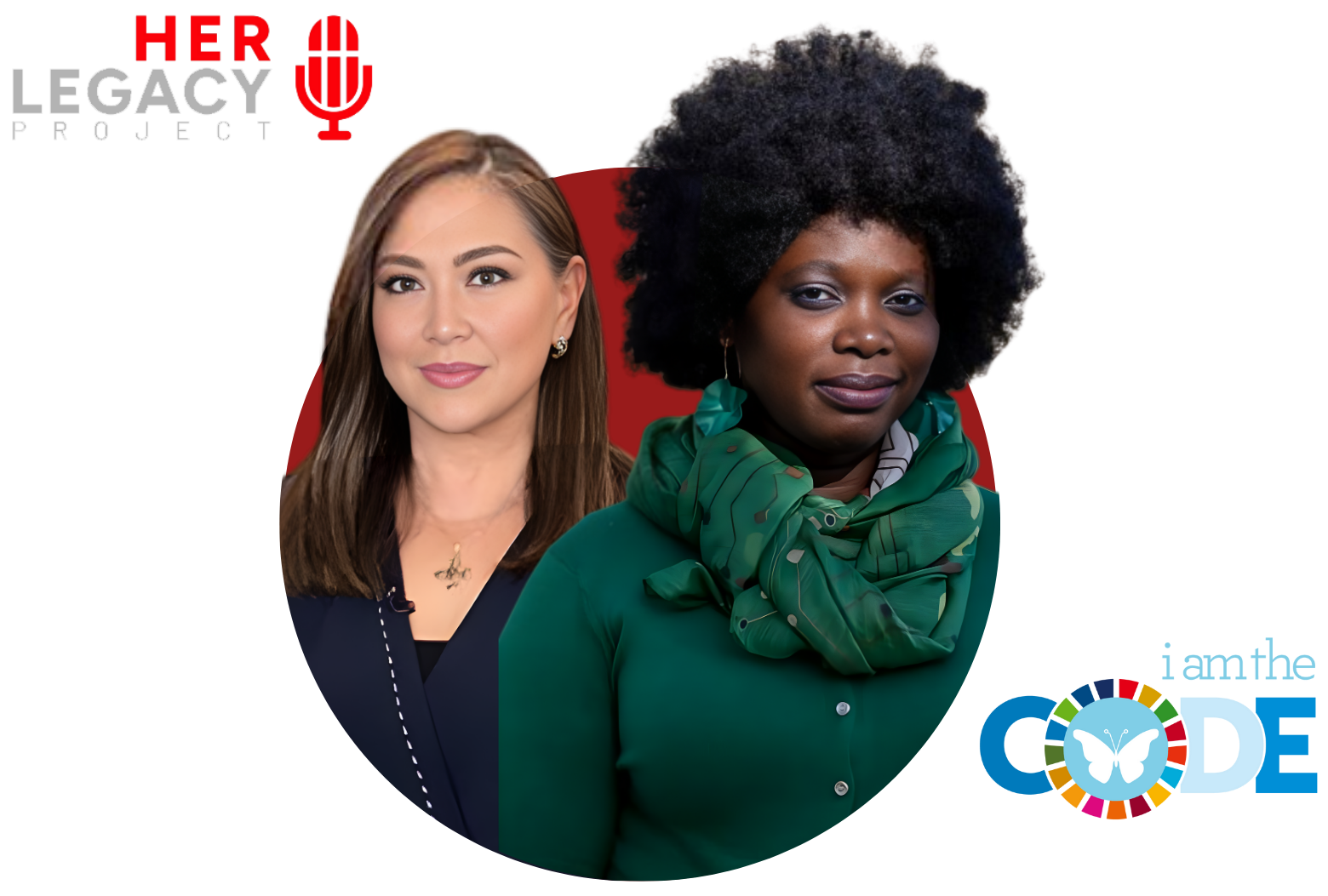
iamtheCODE is the first African-led global movement to mobilize governments, the private sector, philanthropic foundations, investors and civil society to advance STEAMD (Science, Technology, Engineering, Arts, Mathematics and Design) education. Its goal is to mobilize these groups to invest in future technologies that can drive sustainable development for women and girls in marginalized communities.

It aims to enable 1 million young women and girls’ coders by 2030.

WHAT WE AIM

iamtheCODE PH Program Goals

  • Worldwide, iamtheCODE aims to enable 1 million young women and girls coders by 2030.
  • In the Philippines, the DepEd iamtheCODE Program hopes to advance digital education, empowering young students from marginalized communities to build better futures for themselves and their families.
  • The iamtheCODE PH Program is supported by HER LEGACY PROJECT, led by its founder, Karen Davila.

WHAT WE DO

iamtheCODE Project

This 12-week program provides a comprehensive introduction to web development and programming. You'll learn to:

  • Master the fundamentals of HTML for structuring web content.
  • Dive into CSS and learn to style websites with colors, layouts, and responsive design.
  • Explore JavaScript to add interactivity and dynamic elements to your web pages.
  • Gain a solid foundation in Python programming, learning core concepts and building basic applications.
  • This program goes beyond coding, offering valuable skills for personal and professional growth.

You will explore:

  • The Wellbeing Code: Empowering young girls with essential life skills.
  • Sustainable Development Goals: About global challenges and how to make a difference.
  • Design Thinking: Creating better products and services through customer-centric approaches.
  • Communication & Presentation Skills: Mastering effective communication techniques for various settings.
  • Project Management: Planning and executing projects successfully.

HOW WE LEARN

iamtheCODE Modules

Image 1

CHANNEL

1. Welcome to the Program!

  • 1. Welcome to the Program
    • Welcome to the Program
    • Safe Online Badge (iDEA)
    • iamtheCODE Glossary
  • 1.1 Coding for Climate
    • What is Deforestation?
    • What is Recycling?
    • What is Pollution?
Image 2

ASPIRE JOURNEY

2. Learn to Code in HTML!

  • 2. Learn to Code in HTML
    • Web Fundamentals: Web Development with HTML
    • Introduction to HTML5
    • HTML5 New Features
    • Creating an HTML5 Page
    • HTML5 Semantic Elements
    • Creating HTML5 Forms
    • HTML5 Layout Containers
    • Validate with HTML5 Attributes
    • Semantic HTML Lab: NYC Blog
    • HTML Lab: Fashion Blog
    • HTML Tables Lab: Wine Festival Schedule
    • Practice HTML Skills
Image 3

ASPIRE JOURNEY

3. Learn to Code in CSS!

  • 3. Learn to code in CSS
    • Web Fundamentals: Cascading Style Sheets for Web Pages
    • Creating Styles & Styling Text
    • CSS Selectors Lab: Healthy Recipes
    • CSS Typography Lab: Traveling Novelist
    • HTML and CSS Links and Buttons Lab: The Summit
    • Practice CSS Skills
Image 1

ASPIRE JOURNEY

4. Learn to Code in Javascript!

  • 4. Learn to code in Javascript!
    • Web Fundamentals: Dynamic Web Pages with JavaScript
    • JavaScript: Getting Started with JavaScript Programming
    • JavaScript Basics Lab: Kelvin Weather
    • JavaScript Basics Lab: Dog Years
    • JavaScript Arrays Lab: Secret Message
    • Practice Javascript Skills
Image 2

ASPIRE JOURNEY

5. Combining HTML, CSS, and Java Skills!

  • 5. Combining HTML, CSS, and Java Skills!
    • HTML5 with JavaScript & CSS3: Styling HTML5 & JavaScript
    • HTML5 with JavaScript & CSS3: HTML5 & Javascript
    • HTML and CSS Secondary Navigation: FreshDeals Lab
    • HTML and CSS Text Design Lab: Reel Good Reviews
    • Practice combining HTML, CSS and Java Skills
Image 3

ASPIRE JOURNEY

6. Learn to Code in Python!

  • 6. Learn to Code in Python!
    • Getting Started with Python: Introduction
    • Functions in Python: Introduction
    • Python Collections Lab: The Great Robot Race Python Lab
    • Python Lab: Magic 8-Ball
    • Python List Methods Lab: Lens Slice
    • Practice Python Skills
Image 1

LINK

7. Getting to know the Wellbeing Code

  • 7. Getting to know the Wellbeing Code
Image 2

LINK

8. Sustainable Development Goals - SDG's

  • 8. Sustainable Development Goals - SDG's
Image 3

CHANNEL

9. What is Design Thinking?

  • 9. What is Design Thinking?
    • Design Thinking Overview
    • Getting Started with Design Thinking
    • Embracing the Digital Opportunity
    • Design Thinking for Innovation: Stakeholder Engagement
    • Design Thinking for Innovation: Defining Opportunities
    • Design Thinking for Innovation: Brainstorming and Ideation
    • Design Thinking for Innovation: Prototyping and Testing
    • What is Design Thinking?
Image 1

CHANNEL

10. Communication Skills

  • 10. Communication Skills
    • Conveying Your Message without Words
    • Expanding Your Communication Skill Set
    • Harnessing the Power of the Written Word
    • Enhancing Communication through Listening
Image 2

CHANNEL

11. Presentation Skills

  • 11. Presentation Skills
    • Preparing a Great Virtual Presentation
    • Building and Delivering a Great Virtual Presentation
    • Ensuring Successful Presentation Delivery
    • Conquering the Challenges of Public Speaking
Image 3

CHANNEL

12. Project Management

  • 12. Project Management
    • New Project Manager Essentials
    • Defining a Project Scope and Team
    • Creating a Project Schedule and Budget
    • Managing a Project to Minimize Risk and Maximize Quality
    • Navigating through Changes and Conflicts in Projects
    • Taking Final Steps to Bring a Project to its Close
    • Project Selection & Initiation
    • Scope, Schedule, & Cost Planning
    • Resource & Risk Planning
    • Communication, Changes & Documentation
    • Controlling Project Work & Closing
    • Planning & Controlling the Project Schedule
    • Project Management Practical Exercises
    • Quality & Procurement Planning
    • Planning Documents
    • Documents & Terminology

iamtheCODE

Frequently Asked Questions

We've compiled a list of frequently asked questions to make your experience seamless. This section provides quick answers to the topics you're curious about.

Let's see
IamtheCODE is a global movement that helps young women and girls from marginalized communities learn how to code. Its mission is to empower 1 million women and girl coders by 2030. It focuses on equipping youth with practical coding and digital literacy skills.
The program is fundamentally designed for young learners seeking to gain proficiency in programming and technology. The implementation at specific locations, such as Taal High School, actively promotes inclusivity, meaning that while it supports its primary goals (which may often target underrepresented groups), it welcomes and includes both female and male students in its educational offerings.
The IamtheCODE program at Taal High School is structured to provide students across different academic levels with progressive digital skills critical for the 21st century. The curriculum is tailored to ensure relevant, hands-on learning for all participants.
The program is free for participants. The core mentorship program typically involves a commitment of 12 weeks, meeting with your mentor for about one hour per week. You will also have access to a digital platform with thousands of free self-paced courses.
To initiate the IamtheCODE program, the necessary resources center on digital infrastructure, dedicated human capital, and curriculum access. Specifically, this requires reliable computing devices (such as laptops or desktops) with internet connectivity, dedicated mentors to provide consistent guidance, and access to the program's blended digital curriculum which integrates technical training with essential soft skills development.
As this program targets female high school learners in the Philippines—the benefits center on gaining a significant competitive advantage in the digital sector. For Taal High School students, it is inclusive and open to all, including both female and male participants. Participants receive comprehensive training through a 12-week blended curriculum focused on STEAMD subjects, coding, and innovation, providing them with marketable technical skills essential for the future job market.
As a teacher facilitator, your role is to guide and support a mentee through a 12-week program. It primarily involves guiding participants through the learning process rather than direct instruction.
The program directly aligns with Taal High School's regular curriculum, particularly by strengthening the Science, Technology, Engineering, Arts, and Mathematics (STEAMD) components embedded in the current educational framework. The program significantly enhances Taal High School's regular curriculum by providing applied, real-world experience. For example, the coding modules directly support Mathematics by utilizing algorithms and logic to solve problems, reinforcing concepts like functions, geometry, and data analysis.
Other schools in Region III can adopt the IamtheCODE program by replicating the Taal High School model through a direct engagement with the Department of Education (DepEd) Regional/Division Office and the iamtheCODE partner organizations. The process involves formalizing a partnership under the DepEd's umbrella agreement, conducting a skills benchmarking exercise to tailor the curriculum to the school's needs, and identifying and training teacher-facilitators. Key resources for replication are the program's 12-week blended curriculum, access to the iamtheCODE platform with over 60,000 free courses, and leveraging Taal High School's success as a pilot example of implementation in a local context.
To measure the program's success at Taal High School, the primary metrics should focus on quantitative skill attainment and qualitative student empowerment. Success is measured by tracking the completion rate of the 12-week coding curriculum and the number of free courses completed per student. The qualitative success is measured through feedback surveys assessing their confidence in digital skills and problem-solving.